How a real water treatment project is developed: from characterisation to commissioning
Designing a water treatment plant or system is not simply a matter of applying a formula, selecting equipment or choosing a known technology. A real water treatment project involves many variables that shape the final result.
That is why a real project does not start with a drawing. It starts with a much more important question: what problem needs to be solved, and under what conditions must the solution operate?
From that question onwards, engineering must transform an initial need into a viable, buildable, operational and maintainable installation. This transition from theory to practice is where the true value of specialised engineering is demonstrated.
At INGEOBRAS, we approach water treatment projects as a complete process: initial analysis, water characterisation, alternatives assessment, technical validation, process engineering, detailed engineering, support during execution, commissioning and operational follow-up. The objective is not to design a solution that only works on paper, but to develop an installation that responds to the reality of the water, the client and day-to-day operation.
Understanding the problem before proposing a solution
The first stage of any water treatment project is to properly understand the context. It is not enough to know that there is a water quality problem. It is necessary to identify its origin, its evolution, its impact and the objectives that the solution must achieve.
At this stage, aspects such as average and maximum flow rate, water composition, parameters to be corrected, regulatory limits, existing infrastructure, abstraction or discharge point, available space, access, service connections, energy requirements and real operating conditions are analysed.
One of the most common mistakes in water projects is designing too early. When the starting point is incomplete data, there is a risk of selecting an unsuitable technology, oversizing equipment, underestimating operating costs or failing to anticipate problems that will appear later during operation.
That is why, before talking about equipment, pipes or drawings, it is necessary to understand the problem properly. In water treatment, context matters as much as technology.
Water characterisation: the basis of the entire design
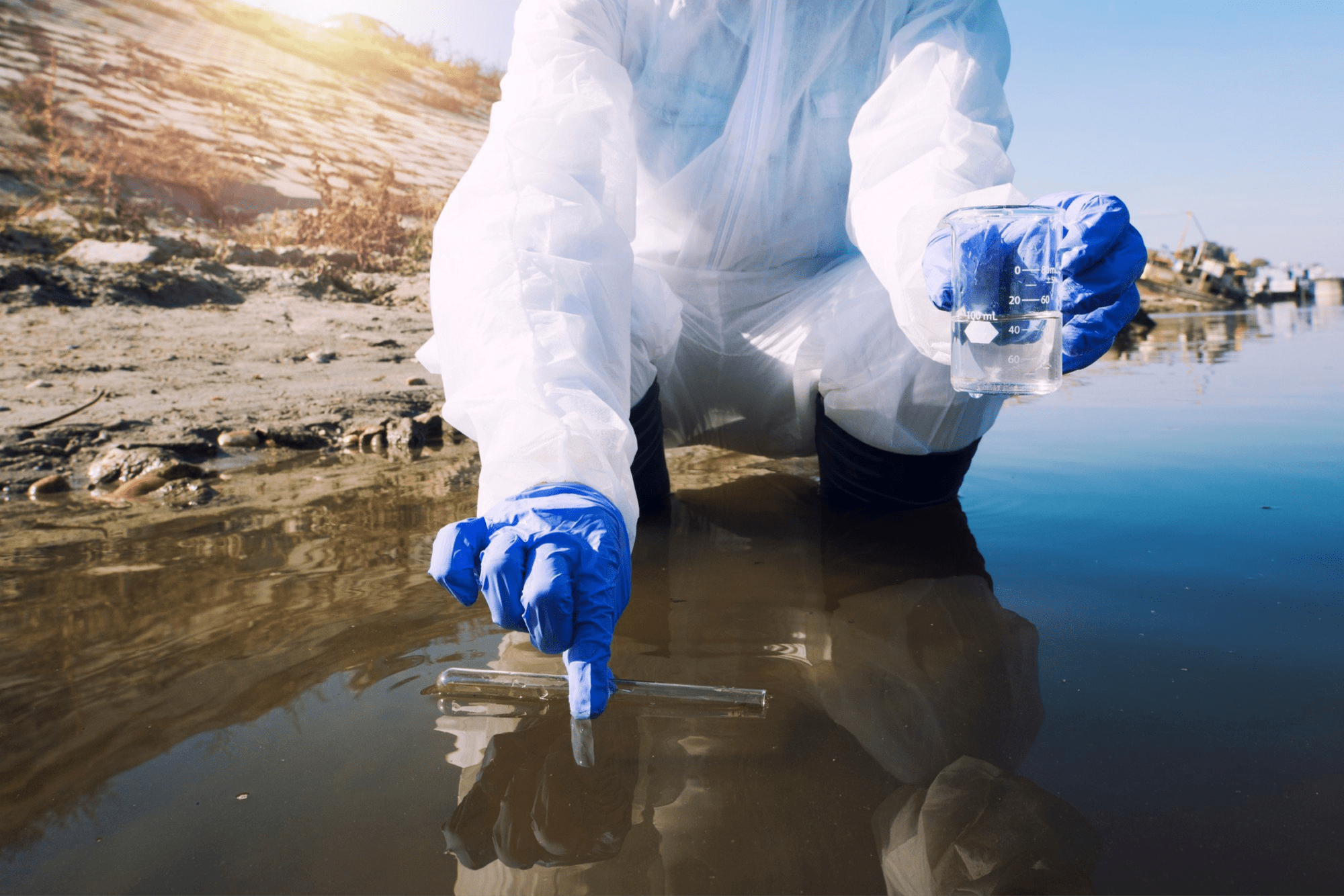
Water characterisation is one of the most important stages of the project. Two installations with the same flow rate may require completely different solutions if the water composition is not the same.
Treating groundwater containing nitrates, iron, manganese or arsenic is not the same as treating surface water with turbidity, organic matter, algae and seasonal variability. Nor is it the same to design a solution for drinking water, reuse, industrial process water, discharge or wastewater treatment.
At this stage, physicochemical, microbiological and hydraulic data are collected and analysed. Depending on the type of project, parameters such as pH, conductivity, turbidity, suspended solids, organic matter, nitrogen, phosphorus, nitrates, ammonium, iron, manganese, hardness, alkalinity, metals, specific contaminants and temporal variations in the resource may be studied.
A single sample may serve as a starting point, but it is not always sufficient to design a robust solution. In many projects, it is necessary to analyse historical data, carry out sampling campaigns or study different water quality scenarios.
This stage makes it possible to answer key questions: whether the problem is constant or variable, whether contamination peaks exist, whether water quality changes seasonally, which parameters truly determine the treatment, whether there are interactions between contaminants and what safety margin should be considered.
A good design starts with good characterisation. Without representative data, engineering works on assumptions. With solid data, technical decisions can be made.
Technical validation: testing, laboratory work and pilot plants
In some projects, analytical information and previous experience make it possible to move directly towards design. In other cases, especially when the water has a complex or variable composition, laboratory tests or pilot trials are recommended.
This stage is particularly useful when working with biological treatment, adsorption, oxidation, advanced filtration, removal of specific contaminants, water reuse or integration of technologies into existing facilities.
Tests make it possible to verify aspects that cannot always be resolved through theoretical calculations alone: real removal performance, reagent consumption, sludge or waste production, head loss, fouling of filter media, backwashing requirements, process stability, sensitivity to changes in water quality, optimum operating conditions and feasibility of scale-up to full-scale plant.
This stage reduces technical and economic uncertainty. It allows alternatives to be compared using project-specific data, limitations to be identified before construction and the design to be adjusted to the reality of the water to be treated.
At INGEOBRAS, the combination of engineering and applied R&D allows this stage to be approached with a practical focus: testing to obtain useful information, not to generate data without application. The objective of a pilot test is to support better decision-making, reduce risks and design with greater reliability.
Alternatives assessment: choosing the right solution, not the most obvious one
Once the problem has been understood, the alternatives assessment begins. This stage is essential because there is rarely only one possible solution.
For the same treatment objective, there may be different technologies, configurations and levels of complexity. The choice should not be based only on theoretical performance, but on a complete assessment of technical, economic, construction and operational feasibility.
Depending on the case, alternatives such as filtration, coagulation-flocculation, adsorption, ion exchange, biological treatment, oxidation, membranes, disinfection, combined treatments, compact solutions, modular plants or integration with existing systems may be analysed.
One alternative may be highly effective from a treatment perspective but have high energy consumption. Another may require a lower initial investment but generate higher maintenance costs. A third may work well in the laboratory but be difficult to operate in a real installation.
That is why, in a real water treatment project, criteria such as removal efficiency, robustness against variations in water quality, energy consumption, reagent consumption, waste generation, ease of operation, maintenance requirements, spare parts availability, available space, capital cost, operating cost, integration with existing facilities and the possibility of expanding or adapting the solution in the future must be compared.
The best solution is not always the most complex one. It is the one that best responds to the client’s specific problem, with the right balance between performance, cost, operation and reliability.
Process engineering: turning the alternative into a system
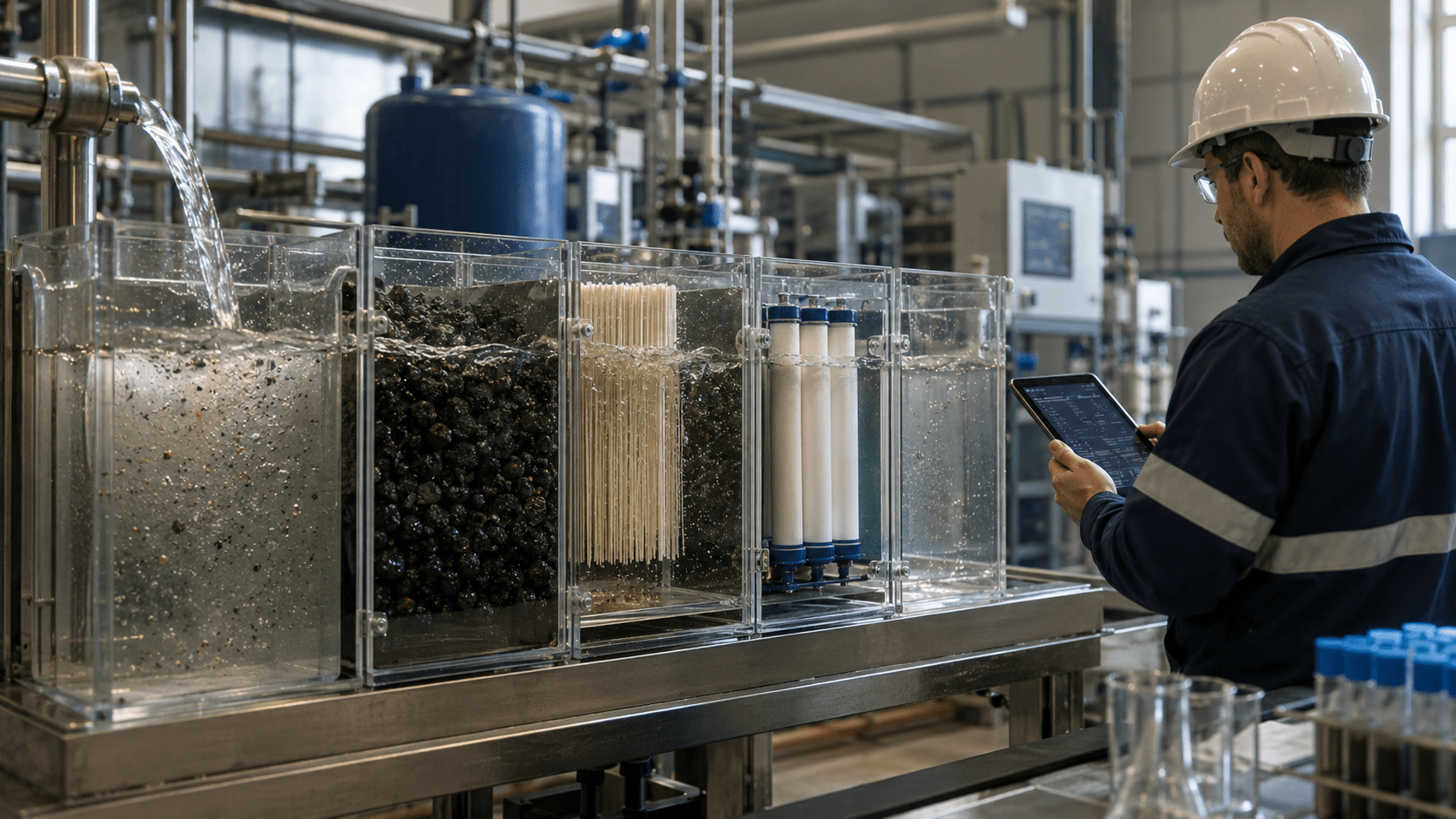
Once the most suitable alternative has been defined, process engineering begins. This stage transforms the conceptual solution into a complete technical system.
Here, the treatment stages, design flow rates, hydraulic balances, operating conditions, expected performance, consumption figures, reagent requirements, instrumentation, main equipment and control criteria are defined.
In a treatment plant, each stage affects the next one. Poorly sized pretreatment can affect subsequent filtration. Incorrect dosing can reduce process performance. A poorly designed hydraulic line can generate head losses, maintenance problems or unstable operation.
For this reason, process engineering must have a global view. It is not only about selecting equipment, but about ensuring that the whole system works coherently.
At this stage, elements such as the process flow diagram, hydraulic line, operating criteria, recirculations, purges, backwashes, storage requirements, dosing systems, operating modes, main alarms and start-up and shutdown conditions are developed.
A good process is not a sum of components. It is an integrated solution.
Detailed engineering: making the solution buildable
Detailed engineering is the step that turns the technical design into an executable solution. At this stage, drawings, calculations, bills of quantities, technical specifications, layouts, diagrams, equipment documentation, installation criteria and the documentation required to execute the project are developed.
This is where many of the constraints that differentiate a real project from a theoretical solution appear: available space, access, interferences with existing installations, hydraulic levels, supports, skids, foundations, ducts, pipes, valves, electrical panels, instrumentation, communications, automation, safety, operational ergonomics and maintenance.
A treatment plant must not only work technically. It must also be buildable, operable and maintainable. This means answering very specific questions: whether a pump can be removed without affecting the rest of the installation, whether there is enough space to replace cartridges, membranes or filter media, whether the operator can safely access valves and instruments, whether bypasses have been provided for maintenance, whether purges, drains and overflows are properly resolved, and whether the automation truly reflects how the plant will be operated.
At this stage, coordination between disciplines is fundamental. Process, hydraulics, mechanical engineering, electrical engineering, control, civil works, safety and operation must be integrated into a single solution.
Detailed engineering is where many future construction and operation problems are avoided.
Equipment selection and technical specifications
In a real project, equipment selection is not limited to choosing a model from a catalogue. Each item of equipment must fit the process, operating conditions, required materials, applicable regulations and maintenance needs.
Pumps, filters, valves, pipes, tanks, blowers, dosing systems, electrical panels, analysers, sensors and control equipment must be selected using technical and operational criteria.
At this stage, aspects such as materials compatible with the water and reagents, real operating range, energy efficiency, operating curves, redundancy, ease of maintenance, spare parts availability, warranties, supply times, integration with the control system and manufacturer technical documentation are reviewed.
This part of the project is especially important when critical equipment or tight deadlines are involved. An incorrect selection can affect performance, operating cost or the execution schedule.
For this reason, engineering must act as a bridge between design, manufacturers, construction and future operation.
Automation, control and monitoring
Automation plays an increasingly important role in water treatment projects. It is not only about installing sensors or programming alarms. It is about defining how the plant should operate, how it should respond to changes in flow rate or water quality, and how it should react to abnormal situations.
At this stage, process instrumentation, control signals, operating logics, manual, automatic and maintenance modes, alarms, interlocks, backwash sequences, automatic dosing, data logging, communication with SCADA and, where applicable, remote monitoring are defined.
A well-automated plant is more stable, safer and easier to operate. It also makes it possible to collect data that can later be used to optimise the process.
In water treatment, data are a tool for operation and continuous improvement. They make it possible to detect deviations, anticipate problems, adjust consumption and improve the overall performance of the installation.
Execution and technical support during construction
A water treatment project does not end when the documentation is delivered. During execution, adjustments, interferences, changes in conditions or adaptation needs may arise.
The presence of engineering during this stage helps resolve doubts, review construction solutions, coordinate changes and ensure that execution remains consistent with the original design.
In water projects, small changes on site can have significant consequences for system operation. A modification to a pipe, level, valve, slope, drain or access point can affect future operation.
That is why technical support during execution is an essential part of the process. Engineering must be able to adapt without losing technical control of the project. This ability to respond is especially important when working in existing facilities, where unforeseen constraints may always arise during the initial phase.
A real project requires technical judgement, but also the ability to adapt.
Commissioning: verifying that the solution works
Commissioning is one of the most important moments in a real water treatment project. It is the stage at which the solution stops being a design and starts operating under real conditions.
During commissioning, all elements of the installation are checked to ensure that they operate correctly and in a coordinated way. This includes checking pump rotation direction, line tightness, operation of valves, instruments, sensors, automatic sequences and alarms, as well as reviewing real flow rates, head losses, dosing, backwashing, treated water quality, process stability and operational safety.
It is also the moment to adjust operation, train staff and validate that the installation meets the intended objectives.
In some treatments, especially biological processes, this stage may require a stabilisation period, as performance is not always immediate. Technical experience is therefore key to interpreting data, adjusting operating conditions and supporting the evolution of the process.
Good commissioning reduces risks and facilitates more stable operation from the outset.
Operation, maintenance and continuous improvement
The success of a project is not measured only on the day it is handed over. It is measured during operation.
That is why a good water treatment project must be designed with the long term in mind. Energy consumption, maintenance, spare parts availability, ease of cleaning, automation, monitoring and adaptability all influence the real performance of the installation.
Operation provides very valuable information. The data collected make it possible to detect deviations, optimise parameters, adjust consumption and improve system performance.
At this stage, aspects such as real energy consumption, reagent consumption, maintenance frequency, treated water quality, process stability, equipment performance, service life of consumables, recurring incidents and improvement opportunities can be reviewed.
Applied engineering does not end with commissioning. It continues through the ability to analyse, improve and adapt solutions to the changing reality of water.
Every project is also a source of technical learning.
The role of INGEOBRAS in water treatment projects
At INGEOBRAS, we understand every water treatment project as a complete process. Our work is not limited to designing a solution on paper, but to supporting the entire journey: from initial analysis to detailed engineering, execution, commissioning and optimisation.
Our experience in water engineering, combined with applied R&D, technological validation and the development of proprietary solutions, allows us to approach projects with a technical and practical vision.
We know that every water source is different, every client has their own constraints and every installation must respond to a specific operational reality. That is why our approach is based on three principles: analyse before designing, compare before deciding and validate before implementing when the project requires it.
Analysing before designing means understanding the origin of the problem, the characteristics of the water and the real operating conditions. Comparing before deciding means studying different alternatives and assessing not only performance, but also economic, construction and operational feasibility. Validating before implementing makes it possible to reduce uncertainty, especially in complex projects or with technologies that require prior verification.
This approach makes it possible to develop technically sound, efficient solutions ready to operate in the field.
At INGEOBRAS, we combine engineering, construction experience, process knowledge and innovation capacity to turn real needs into operational installations. That is the true value of specialised engineering: connecting theory with practice and designing solutions that can be built, maintained and operated in the long term.
Conclusion
A real water treatment project is much more than the application of a technology. It is a technical process that requires analysis, judgement, coordination and adaptability.
From initial characterisation to commissioning, every decision influences the final result. Good design means understanding the problem, selecting the right solution, making it buildable and ensuring that it can be operated reliably.
The transition from theory to practice is where engineering demonstrates its true value.
Because in water treatment, a good solution is not only one that works on paper. It is one that works in reality.