Emerging contaminants in water: the technical challenge that will define the future of treatment
For decades, water treatment has focused on widely known parameters: organic matter, suspended solids, nitrogen, phosphorus, turbidity, metals and pathogenic microorganisms. These indicators remain essential, but the sector is now facing an increasingly complex challenge: the presence of emerging contaminants in water.
These compounds are not always new. Many have been present in the environment for years, but until relatively recently they were not detected with sufficient accuracy, studied in depth or clearly included in regulations. Improvements in analytical techniques, scientific progress and growing environmental concern have placed this issue at the centre of the technical debate.
The challenge is especially relevant because many emerging contaminants can appear at very low concentrations and still raise concern due to their persistence, toxicity, bioaccumulation potential or possible long-term effects on ecosystems and human health.
For water engineering, this represents a change in approach. It is no longer enough to design treatment systems for traditional contaminants. It is necessary to anticipate more complex, more diverse substances that, in many cases, are more difficult to remove.
What are emerging contaminants in water?
Emerging contaminants are chemical substances, materials or biologically active compounds whose presence in water is generating growing concern. They are considered “emerging” not necessarily because they have appeared recently, but because their detection, impact or regulation has gained greater relevance in recent years.
They include very different groups, such as PFAS, microplastics, pharmaceutical residues, personal care products, endocrine disruptors, certain pesticides, metabolites and persistent industrial compounds.
This diversity means that there is no single technological solution. Each contaminant behaves differently in water and requires a specific assessment.
One of the most complex aspects is that many of these compounds do not behave like conventional contaminants. Some are highly persistent, others transform into by-products, others adsorb onto solid particles and others remain dissolved in water for long periods.
For this reason, the first step is not to select a treatment technology, but to understand the problem: which contaminant is present, at what concentration, in which water matrix and with what removal objective.
PFAS, microplastics and new regulatory challenges
Among emerging contaminants, PFAS currently play a leading role. These per- and polyfluoroalkyl substances have been used for decades in numerous industrial applications and consumer products due to their resistance to water, oil and heat.
It is precisely this resistance that makes them an environmental problem. Many PFAS are highly persistent and can remain in the environment for long periods, which is why they are often referred to as “forever chemicals”.
Their presence in surface water, groundwater and drinking water has led to stronger monitoring and control under different regulatory frameworks. In Europe, the Drinking Water Directive includes specific parameters for PFAS control, including values associated with “total PFAS” and the “sum of PFAS”. The European Commission has also published technical guidelines on analytical methods for their monitoring.
In addition, the revision of the Urban Wastewater Treatment Directive introduces new requirements related to micropollutants, additional treatment, and the monitoring of PFAS, microplastics and other parameters of environmental and public health interest.
For operators, public administrations and engineering companies, this context means improving monitoring systems, assessing risks and studying suitable treatment technologies. Processes such as adsorption, ion exchange, membranes or certain advanced solutions may be useful, but their effectiveness always depends on the type of PFAS, water quality, flow rate, concentration and operating conditions.
Microplastics represent another highly relevant challenge. Unlike other chemical contaminants, they are not a single substance, but particles of different sizes, shapes, origins and compositions. They may come from the fragmentation of larger plastics, textile fibres, tyres, cosmetics, packaging or industrial processes.
This variability complicates both their detection and their removal. From a technical perspective, microplastics require a review of analytical methodologies and treatment lines. It is not enough to speak generally about “removing microplastics”. It is necessary to define which particle size is being considered, how it behaves within the process and what its final destination will be after treatment.
Technologies such as optimised coagulation-flocculation, advanced filtration or membranes may play an important role, but they must be validated according to each specific case.
Pharmaceutical residues, personal care products and endocrine disruptors are also particularly relevant. These compounds can reach water through urban wastewater, industrial discharges, hospital effluents or agricultural and livestock runoff. Their presence raises questions about long-term effects, especially when dealing with active substances at low concentrations.
Why conventional treatments are not always enough
Conventional treatment and wastewater treatment plants were designed to solve specific problems: reducing organic matter, removing solids, controlling nutrients, disinfecting or complying with certain discharge limits. However, many emerging contaminants were not at the centre of the original design of these infrastructures.
This does not mean that existing treatments are useless, but rather that they may not be sufficient on their own. Some emerging contaminants can be partially removed by conventional processes, while others pass through the treatment line with little or no reduction. In certain cases, they may even transform into secondary compounds that also need to be assessed.
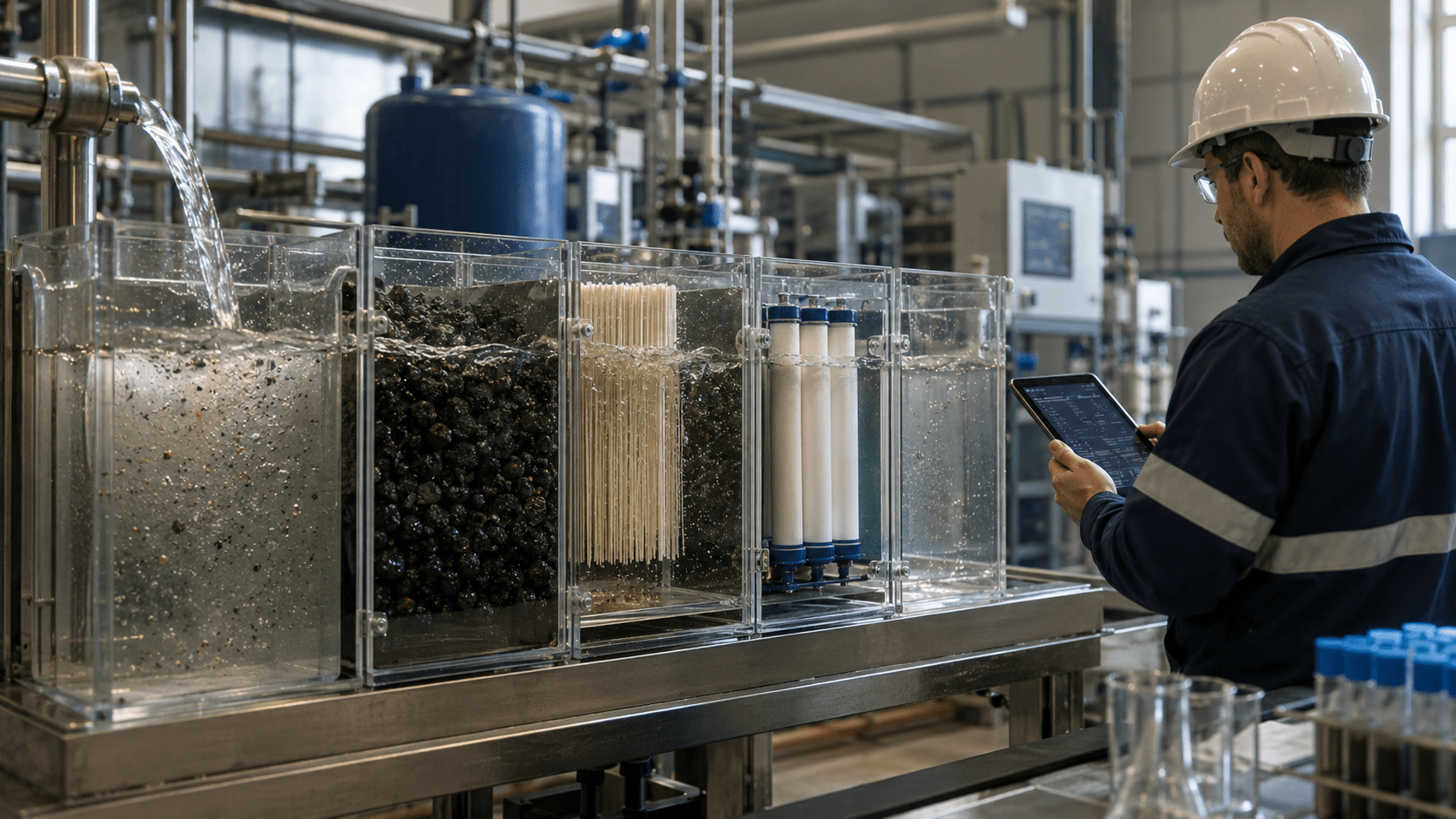
For this reason, the future of water treatment will increasingly depend on combined solutions. There is no universal technology capable of solving all emerging contaminants in every water matrix. The technical response usually requires a combination of physical, chemical, biological and separation processes, adapted to the characteristics of the water and to the final treatment objective.
In this context, engineering must play a key role. Technology selection cannot be based only on catalogues or standard solutions. It must be supported by analytical data, laboratory testing, pilot studies, operating criteria and economic assessment.
A technology that works under controlled conditions may not be viable in a real installation if it requires too much energy, generates difficult-to-manage waste or does not adapt to the available space.
Monitoring, validation and integration: the keys to the new water treatment approach
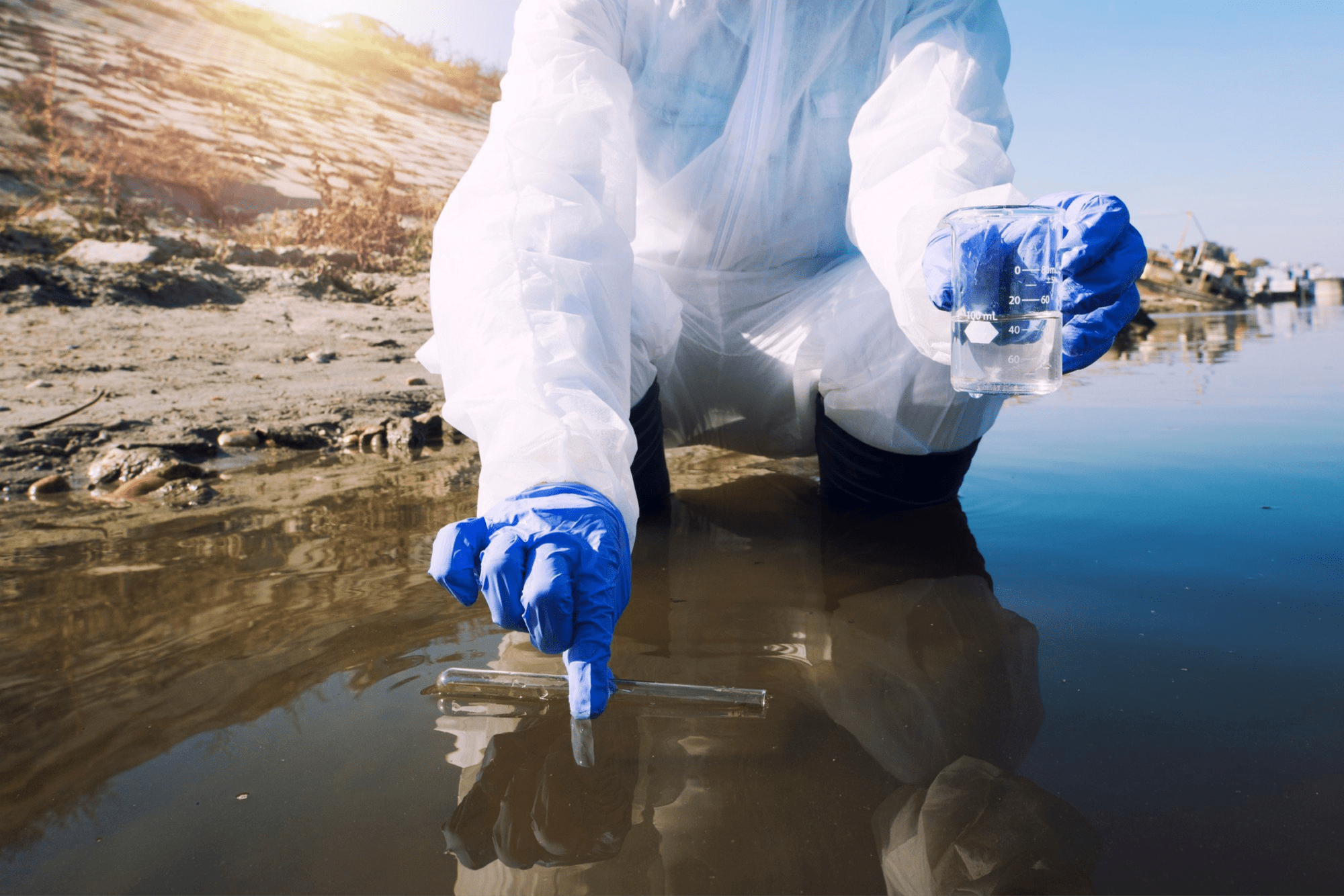
Managing emerging contaminants does not begin at the treatment plant, but with water characterisation. Before designing a solution, it is essential to understand the matrix, the variability of the resource, the presence of other contaminants, seasonality and the required quality objectives.
Once the problem has been identified, experimental validation becomes fundamental. Pilot tests make it possible to verify real performance, consumption, maintenance requirements, waste generation and process stability.
This stage is especially important when working with complex contaminants or waters with variable composition. It reduces uncertainty before scaling a solution up to full-scale plant and supports data-based decision-making.
Integration into the plant is another decisive aspect. The treatment of emerging contaminants cannot be analysed in isolation. It must be incorporated into a complete treatment line, compatible with existing processes and with the client’s operational reality.
This includes aspects such as available space, automation, control, staff training, operating costs and long-term maintenance.
In addition, digitalisation and advanced monitoring will play an increasing role. As regulatory requirements and social awareness around water quality increase, it will be necessary to have more data, better control systems and greater capacity to respond to changes in resource quality.
The role of INGEOBRAS in addressing new water challenges
For INGEOBRAS, emerging contaminants represent one of the major technical challenges for the future of water treatment. Their complexity requires a combination of engineering, scientific knowledge, field experience and applied R&D.
The response cannot be generic. Each project requires analysing the problem from its origin, studying the characteristics of the water, identifying the most suitable technologies and validating their behaviour before proposing a final solution.
This approach reduces risks, optimises costs and makes it possible to design more robust, flexible installations adapted to the operational reality of each client.
INGEOBRAS’ experience in water engineering, together with its work in research, development and experimental validation, makes it possible to address these challenges from an integrated perspective. It is not only about designing infrastructure, but about developing solutions capable of responding to a changing reality: new substances, new regulatory requirements, greater pressure on water resources and a growing need for water reuse.
This approach also connects with the development of modular and advanced solutions such as BIOBOX, focused on offering compact, scalable treatments adapted to specific water quality problems.
The future of water will be more technical, more analytical and more preventive. Emerging contaminants are forcing the sector to move towards more flexible treatments, better monitored systems and solutions capable of adapting to each case.
In this scenario, engineering will be essential to connect scientific knowledge with real field application.
Emerging contaminants in water are not a problem of the future. They are already a present reality that is defining the evolution of treatment. Addressing them requires technical rigour, innovation and the ability to anticipate.
Because the challenge will not only be to treat more water.
It will be to treat it better.